


© 2026 «Kompetenz». All rights reserved


 English
 Русский
 Қазақша
 العربية
 Français



Large industrial facilities such as refineries, petrochemical plants, power stations, metallurgical complexes and large manufacturing plants represent some of the most complex risks in the global insurance market. The scale of potential losses from operational accidents, fires, explosions or environmental incidents may reach hundreds of millions of dollars. For this reason, such risks are rarely retained entirely by a single insurer and are typically supported by international reinsurance markets.
One of the most important steps in obtaining stable reinsurance capacity for industrial risks is the preparation and execution of a professional risk survey. A well-structured survey allows insurers and reinsurers to understand the operational risk profile of the facility and evaluate the adequacy of existing protection systems.
A risk survey is a comprehensive technical inspection of an industrial facility conducted by specialized engineers and risk consultants. The objective of the survey is to analyze operational processes, identify potential hazards and evaluate the effectiveness of safety systems designed to prevent major losses.
For reinsurers, survey reports are a key component of underwriting analysis. Without a high-quality engineering survey, large industrial risks may face higher premiums, reduced capacity or even difficulty obtaining coverage from international markets.
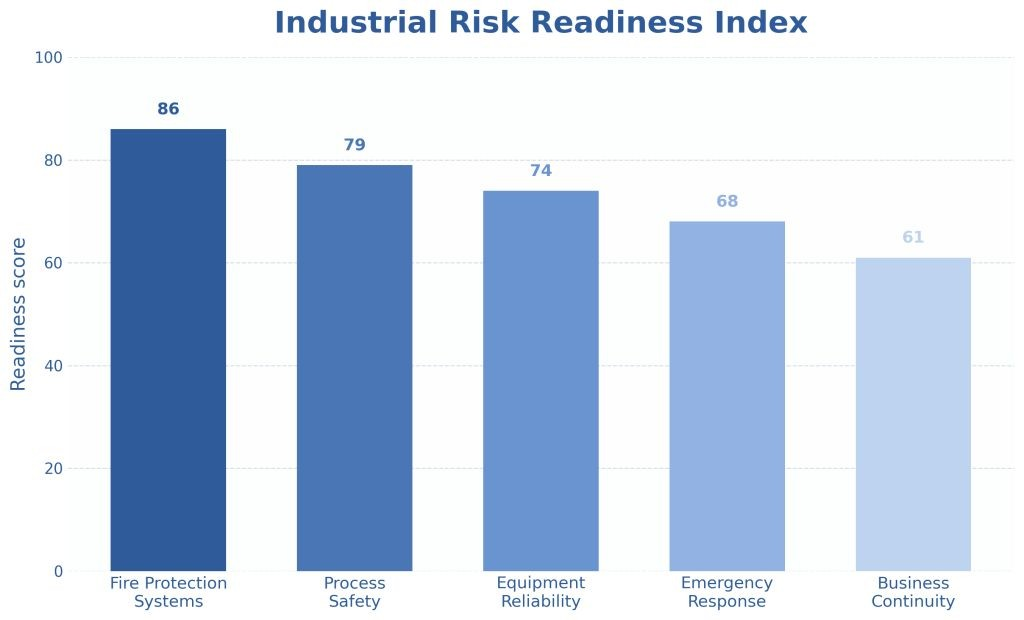
During a reinsurance survey, specialists typically assess multiple aspects of the facility's operations. The analysis focuses on both technical infrastructure and organizational risk management practices.
The quality of risk management at a facility directly influences the willingness of reinsurers to participate in a risk program. Facilities with strong safety systems and documented operational controls are more attractive to global reinsurance markets.
A positive survey report can lead to several strategic advantages for industrial clients.
Companies seeking insurance coverage for large industrial assets should proactively prepare for the survey process. Preparation improves transparency and demonstrates strong risk management culture to insurers and reinsurers.
Typical preparation steps include updating technical documentation, reviewing safety procedures and ensuring that all fire protection and monitoring systems are operational and properly maintained.
For companies operating large industrial facilities, a professional risk survey should not be viewed merely as an underwriting requirement. Instead, it represents a strategic opportunity to improve operational resilience and strengthen access to global insurance and reinsurance markets.


