


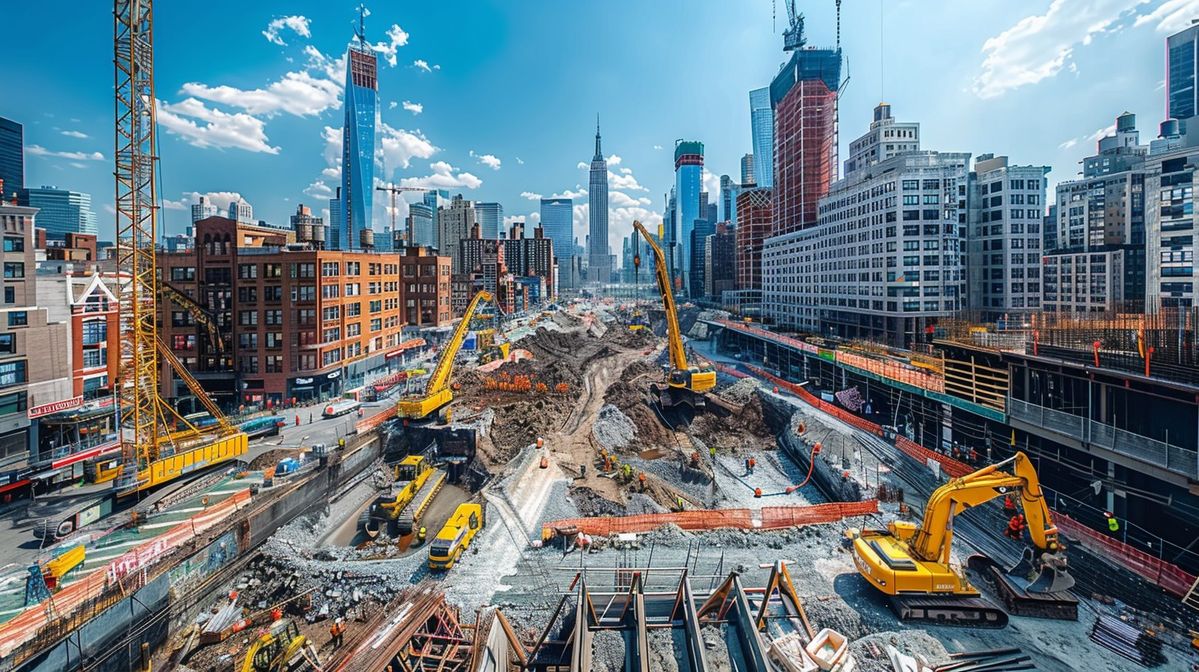


1. CAR vs EAR: What is the difference in practice
“Construction All Risks” (CAR) is typically used for civil works and building projects: foundations, structures, architectural works, infrastructure, utilities, and associated temporary works. “Erection All Risks” (EAR) is typically used for installation and electro-mechanical projects: power plants, industrial equipment, turbines, pipelines (installation-heavy), processing units, telecom and high-value machinery packages.
In reality, large projects are hybrid. A single policy can be structured as CAR with EAR extensions (or vice versa). The material difference is not the label; it is how the wording treats: testing and commissioning, machinery breakdown during testing, design defects, workmanship, serial losses, and interface risk among contractors.
2. Coverage architecture: what “All Risks” actually means
CAR/EAR is generally written on an “all risks of physical loss or damage” basis: it covers sudden, accidental physical loss or damage to insured property during the policy period, unless excluded. “All risks” is therefore a logic of broad insuring clause + exclusions. Coverage quality is determined primarily by exclusions, sub-limits, deductibles, and definitions.
2.1 Typical insured interests
- Contract works: permanent works under construction/erection.
- Materials and supplies: on-site and often in transit and storage (depending on wording).
- Temporary works: scaffolding, formwork, temporary facilities (if declared and not excluded).
- Construction plant and equipment: sometimes included or insured separately (CPM / Contractors’ Plant & Machinery).
- Existing property: employer’s existing structures and assets at or adjacent to site (usually by endorsement and careful valuation).
2.2 Typical insured parties
- Employer/Project owner (principal).
- Main contractor/EPC.
- Subcontractors (named or “all contractors and subcontractors”).
- Lenders (loss payee / mortgagee / financier clause).
2.3 The project lifecycle covered
- Construction / erection period.
- Testing and commissioning (critical for EAR-heavy projects).
- Maintenance period (defects liability / maintenance): limited coverage, must be defined precisely.
3. The real risk model: why projects fail financially
A construction loss is rarely only “damage.” It is usually a chain: physical loss → interface delays → rework → supply chain disruption → contractual penalties → financing costs → reputational impact. CAR/EAR covers the first component (physical loss) and can be extended to time-related financial loss via DSU/ALOP, but only if the program is engineered correctly.
3.1 Major loss drivers (high frequency)
- Water ingress and flooding during partial completion.
- Fire during hot works, temporary wiring, storage of combustible materials.
- Theft of high-value components and copper (site security weaknesses).
- Collapse of temporary works or poor sequencing.
- Damage during lifting operations (cranes, rigging, load path errors).
3.2 Major loss drivers (high severity)
- Catastrophe weather events (storm, hail, flood) on large exposed sites.
- Serial defects (repeatable design/manufacturing defect leading to multiple failures).
- Testing failures on turbines, generators, pressure systems (EAR domain).
- Major interface conflicts (multi-package EPCM model without clear responsibility).
4. Key extensions and why they matter
4.1 Third Party Liability (TPL)
Most CAR/EAR programs include third party liability for bodily injury and property damage arising out of the project. The critical point is the boundary: what is “third party” when multiple insureds are included, and how cross-liability is treated.
- Cross liability clause: treats each insured as separate, enabling claims between insured parties where legally permissible.
- Offsite liability: may be required for offsite storage, fabrication yards, or transport operations.
- Vibration, weakening, removal of support: often restricted and may need specific endorsement for urban works.
4.2 DSU / ALOP (Delay in Start Up / Advanced Loss of Profits)
DSU (often called ALOP) covers loss of gross profit, additional financing costs, and sometimes standing charges if project completion is delayed due to insured physical damage. DSU does not cover delays from pure financial, regulatory, or contractual issues unless they are consequences of insured damage.
DSU is where many programs fail. Common failure modes:
- Insufficient “indemnity period” compared to realistic critical path recovery time.
- Underestimated “daily value” (gross profit / margin), ignoring seasonality and ramp-up profiles.
- No robust “critical path” definition, causing disputes at claim stage.
- Deductible structured as days (time excess) but the schedule buffer is mis-modeled.
4.3 Transit and offsite storage
High-value projects often fail at logistics. If CAR/EAR is intended to include transit and offsite storage, the policy must define: when coverage attaches (Incoterms alignment), what routes/limits apply, and how accumulation risk is controlled.
4.4 Maintenance / defects liability period
Maintenance extensions commonly cover damage caused by the contractor while performing maintenance operations, and sometimes damage discovered during maintenance that results from an insured event during construction. They usually do not convert the policy into a warranty for poor workmanship.
5. Exclusions that decide outcomes (and how to negotiate them)
The difference between a “good” and “bad” CAR/EAR policy is mainly the handling of defects, design errors, and workmanship. Many large losses are defects-related. Insurers will exclude “the defective part” but the market varies on whether resultant damage is covered and how broad the exclusion is.
5.1 Defects, design, and workmanship: practical view
- Resultant damage approach: repair/replacement of the defective part may be excluded, but consequential damage to non-defective parts may be covered.
- Serial loss control: insurers may apply sub-limits, higher deductibles, or specific clauses where a defect can repeat across units.
- Testing exclusions: EAR programs must define what constitutes testing and what is covered during testing and commissioning.
5.2 Common exclusions to review line-by-line
- Wear and tear, gradual deterioration (often straightforward).
- Consequential loss (this is why DSU/ALOP may be needed).
- Faulty design/material/workmanship (critical wording and market-specific clauses).
- Defective part exclusion scope (what is “part,” “component,” “item,” “unit”).
- Cyber exclusions (increasingly relevant for SCADA/IoT projects).
- Pollution exclusions (important for industrial sites; may require environmental liability).
- War, terrorism (sometimes available as separate covers).
5.3 The negotiation principle: insure the loss you cannot absorb
Policy negotiation should follow project economics. If rework of a single defective component is manageable, but the consequential damage and DSU are existential, then the wording must maximize resultant damage and DSU triggers, while accepting a narrower “defective part” carve-out.
6. Limits, sums insured, deductibles: engineering the economics
6.1 Sum insured for contract works
The sum insured should reflect the full contract value including materials, labor, and escalation where relevant. Underinsurance can reduce claim payments proportionally in some jurisdictions and wordings.
6.2 Accumulation risk
Large projects accumulate value rapidly, especially when imported equipment arrives early. Accumulation analysis prevents hidden under-limits on: on-site storage, offsite storage, and transit. This is particularly important for modular construction and phased deliveries.
6.3 Deductibles (excess) as a governance tool
Deductibles should be aligned with: contractor’s risk appetite, cash-flow resilience, and loss prevention capability. Excesses may be peril-specific (higher for flood, windstorm, testing). If the deductible is too low, premium increases and claims handling becomes noisy. If too high, the policy becomes irrelevant for operational reality.
7. Risk engineering: what reduces premium and improves claim outcomes
CAR/EAR is underwritten through a combination of documentation review and risk engineering. The same project can price very differently depending on: site controls, contractor maturity, sequencing, hot works governance, flood protection, security, and testing protocols.
7.1 Documentation insurers value
- Project schedule with critical path, float, and milestones.
- Site layout, exposure mapping (flood plains, wind zones), drainage design.
- Fire protection plan (temporary and permanent), hot works permit-to-work.
- Security plan (access control, CCTV, guard force, storage).
- Lifting plan governance and crane management.
- Testing and commissioning procedures, OEM requirements, quality control.
7.2 The underwriting logic
Insurers price uncertainty. Clear governance, measurable controls, and realistic schedules reduce uncertainty and therefore reduce risk loadings. In practice, the “best” broker strategy is to present the project as a controllable system, not a vague promise.
8. Claims: how CAR/EAR claims are won or lost
8.1 The first 72 hours
- Secure the site, prevent further damage (mitigation duty).
- Notify insurers/adjusters as required by the policy.
- Document everything: photos, logs, weather data, CCTV, witness statements.
- Preserve damaged parts for forensic review (especially for testing failures).
8.2 The evidence chain
CAR/EAR disputes usually revolve around causation and exclusions. A defensible claim requires: a clear event timeline, engineering causation, and separation of “defective part” costs from “resultant damage” costs. For DSU, it also requires a robust critical path analysis and quantified delay attribution.
8.3 Typical settlement structure
- Material damage: repair/reinstatement cost (subject to terms).
- Extra expenses: overtime, expedited shipping (if covered).
- DSU: lost gross profit / increased cost of working within indemnity period (if triggered).
9. Procurement strategy: placing CAR/EAR like a professional
9.1 One policy vs multiple policies
For large projects, an Owner Controlled Insurance Program (OCIP) can reduce coverage gaps and interface disputes, but requires strong governance. Contractor controlled placements may be simpler contractually, but can create alignment issues, inconsistent deductibles, and unclear claims leadership.
9.2 Tendering logic
- Start placement early: 6–12 months for complex industrial projects.
- Use a structured submission pack: schedule, exposures, controls, values, DSU model.
- Compare not only premium: compare defects clauses, testing scope, DSU triggers, sub-limits, and claims protocols.
9.3 Lender requirements
Financiers often require specific clauses: loss payee, non-vitiation, notice of cancellation, and minimum A-rated security. Align wording and reporting obligations with the financing documents to avoid technical default risks.
10. Practical checklist: CAR/EAR specification for a project brief
- Define scope: works, existing property, offsite storage, transit, temporary works.
- Confirm parties: owner, EPC, subcontractors, lenders; add cross liability.
- Set sums insured: contract value, escalation, maximum accumulation.
- Choose deductibles: general + catastrophe + testing + water damage.
- Negotiate defects and testing: resultant damage clarity, serial loss approach.
- Decide DSU/ALOP: daily value, time excess, indemnity period, critical path method.
- Claims protocol: notification, adjuster access, document list, mitigation authority.
- Risk engineering plan: fire, flood, security, lifting, QA/QC, commissioning.
11. FAQ (for SEO)
Does CAR/EAR cover design errors?
It depends on the defects/design exclusion. Many wordings exclude the cost of correcting the defective design itself but may cover resultant physical damage. The exact outcome is driven by clause wording, definitions of “part,” and whether the damage is sudden and accidental.
Is DSU/ALOP automatically included?
Typically no. DSU/ALOP is usually an add-on cover with its own limits, deductibles (often in days), and strict trigger: delay must result from insured physical damage.
What is the biggest mistake buyers make?
Treating CAR/EAR as a commodity and focusing on premium while ignoring defects/testing wording and DSU modelling. These are the areas that determine whether the insurance responds to the largest losses.
How do you choose the sum insured?
Use the full contract value and validate accumulation scenarios for storage and transit. Underinsurance and hidden sub-limits are common reasons for insufficient recoveries.
12. Request a CAR/EAR review
For complex projects, the highest value service is a pre-placement wording review and DSU modelling: it reduces disputes at claim stage and often improves pricing through better risk presentation.
